How to Keep Project Decisions from Getting Lost in Chat
The problem is not that your team doesn't write things down. It's that the one sentence explaining why a decision was made lives in a thread that scrolls away in a week.


Three weeks after a client agreed to cut a feature from scope, someone on the build team added it back in. Nobody was lying. The person who added it wasn't in the Slack thread where the client said, fine, drop it, we'll ship without it. That thread was two hundred messages ago, under a different topic, next to a GIF about lunch.
This is not a chat problem. Chat did its job — it carried a live conversation between people who needed to talk. The problem is that a decision was made inside a format built for talking, and nothing pulled it out into a format built for lasting.
The failure isn't a lack of documentation
Most teams that lose decisions this way don't have too little written down. They have plenty written down — status updates, standup notes, a wiki someone set up two years ago that nobody opens. What they're missing is smaller and more specific: a record that ties a decision to the thing it changed, the reason it was made, who owns it, and when.
A decision without that context isn't wrong, exactly. It's just unfindable by anyone who wasn't in the room. And on a remote team, or an agency juggling four clients, or a small business where the founder makes half the calls in a hallway-equivalent DM, most people weren't in the room.
Three ways this actually costs you
An agency drops a deliverable at the client's request, mid-project. The developer who joins the following week rebuilds it because the task description still says it's required. Nobody told the task. The chat message that authorized the cut is real, true, and completely invisible to anyone not scrolling that specific channel on that specific day.
A remote team spanning three time zones agrees, in a call nobody recorded, to move the API cutover from Friday to the following Tuesday because the client's finance system closes books on Friday. The person covering the on-call shift that weekend still has Friday in their calendar. They page someone unnecessarily. The reason for the change — books closing — existed for about four minutes, spoken aloud, and then it was gone.
A small business owner tells a vendor, over a phone call summarized in a two-line Slack message, that they'll accept a 10% price increase in exchange for faster turnaround. Six months later, someone renegotiating the contract has no idea the increase was a deliberate trade and tries to push the price back down, undoing an agreement that made sense at the time for a reason nobody wrote anywhere near the contract.
None of these teams lacked communication. They lacked a place for the decision to live once the conversation that produced it had ended.
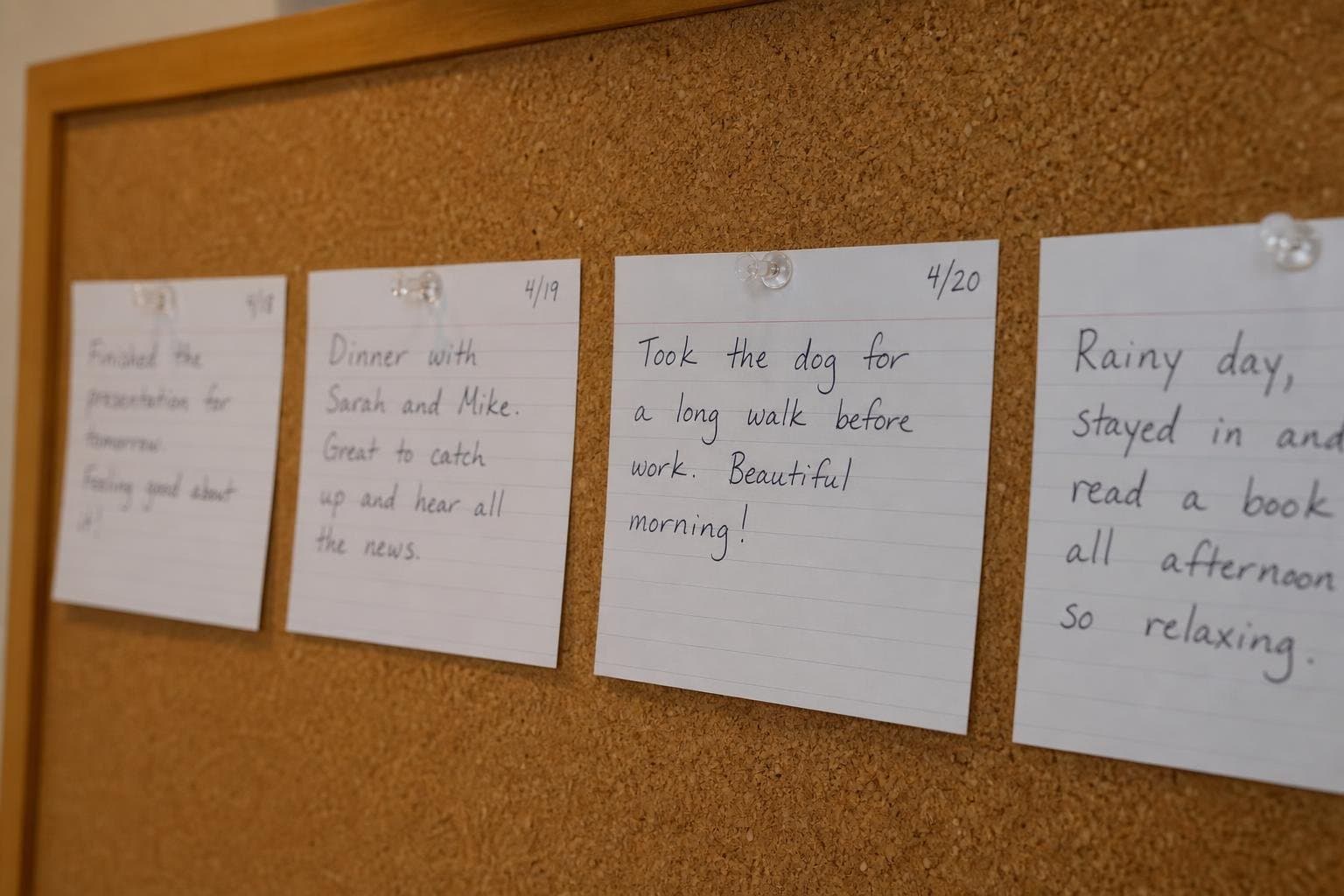
What a decision record actually needs
You don't need meeting minutes. Minutes capture everything that was said, which means nobody reads them back. A decision record captures only what changed and why, attached to the thing it changed. Five fields do the job:
- Decision — the one-sentence call that was made, stated as a fact, not a discussion.
- Reason — why, in a sentence a stranger could understand without having been in the conversation.
- Affected task or project — the specific piece of work this changes, named directly.
- Owner — who is accountable for the decision holding, not who happened to type it.
- Date — when it was decided, so anyone can tell if it's still current.
That's the whole template. It fits in the space of two chat messages, but it lives somewhere a chat message doesn't: next to the work.
Decision: Cut the CSV export from v1 scope.
Reason: Client confirmed it's not needed for the pilot; revisit after launch.
Affected: Reporting module (Task #Exports)
Owner: Priya
Date: 2024-03-11
Notice what it doesn't include: no attendee list, no play-by-play of who argued what, no action items unrelated to the decision itself. Those belong in the conversation, if anywhere. The record exists only to answer one question later: what did we decide, and why, and does it still hold.
Where it should live, not what it should be called
The record's format matters less than its location. A decision about a task belongs on that task, not in a separate decisions channel that becomes its own graveyard. A decision about a whole project's direction belongs on a document scoped to that project, so it sits next to the plan it changed rather than in a chat history that will eventually get archived or simply scroll past everyone's attention.
This is the actual argument against relying on chat for decisions: chat has no scope. A message lives in a channel, not on the task it affects. Finding it later means remembering roughly when it happened and searching for words you hope you typed correctly. A task comment or a document attached to the task has a fixed address. You don't search for it — you're already standing next to it when you open the work.
On Team and Tricks, that's the difference between a task's description and its discussion. The description is where the current, agreed shape of the work lives — including a short decision line when something material changed. The task's own chat is where the back-and-forth that produced the decision can stay, searchable and attached to the right thing, instead of drifting through a general channel that has nothing to do with this particular task.
The discipline is brevity, not thoroughness
Teams that try to fix this problem usually overcorrect. They mandate meeting minutes for every call, or a decision log spreadsheet that someone has to remember to update, and within a month it's abandoned because keeping it current became a second job nobody asked for. The record dies the same way the original documentation did — not from bad intentions, but from being more work than the decision was worth.
The five-field pattern works because it's fast enough to write in the moment the decision is made, by the person who made it, attached to the thing it changed. That's the whole design constraint. Anything that adds ceremony — approval chains, formatting rules, a required review step — turns a habit into a chore, and chores get skipped first.
What to remember instead of a decision
The distinction worth keeping isn't documentation versus no documentation. It's durable versus disposable. A decision spoken in a call is disposable the moment the call ends, no matter how good the call was. A decision written next to the work it changed, with a reason a stranger could follow, is durable for as long as that work exists — and durable is the only version that helps the person who joins the project after everyone else has moved on to something else.