Who Is Waiting on Whom
Half of a service business's delay isn't work in progress — it's work parked pending somebody else, and that state is invisible in a tool that only tracks what's being worked on.


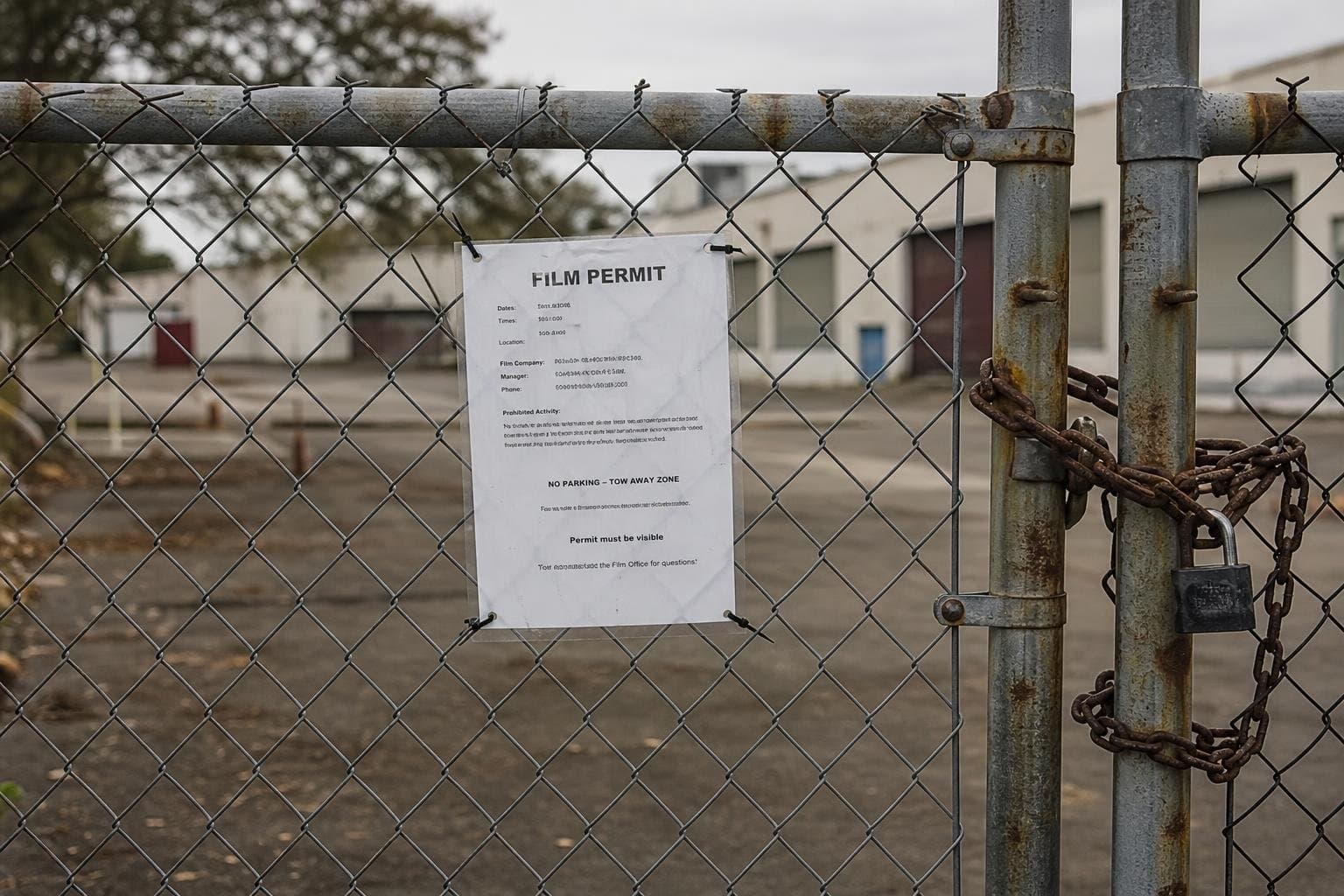
Mara Ellison has a four-person crew booked for Thursday, a location scouted, and a shot list finished two weeks ago. What she doesn't have is the filming permit, which sits with a city office that promised "end of week" nine days ago. Her production board says the shoot is in progress. It isn't. It's parked, waiting on a stranger at a desk who doesn't know her name.
If you ask Mara what she's doing right now, the honest answer is nothing. She's checked every box she controls. The work that's left belongs to someone outside her team, and no amount of effort on her side moves it. That's not idle time and it's not progress — it's a third thing, and most tools don't have a place to put it.
The permit, the copy, and the manuscript
This is not unique to film. Swap the permit for client copy and you get Devon, an account lead at a six-person agency, who finished the landing page build Tuesday and has been unable to launch since, because the client contact — Priya, at Lindgren & Cole — hasn't sent final approved wording for the hero section. Devon has pinged her twice. The task sits on Devon's board looking exactly like the fourteen tasks Devon is actually working on.
Swap it again and you get an editor three chapters into a developmental pass, stalled because author Thomas Reyes owes two chapters of revision before the next read can start. The editor isn't behind. The editor is waiting on a person who owes work and doesn't yet know it's overdue, because nobody told him in a way that registered as a deadline instead of a suggestion.
Three different industries, three different outside parties — a permit office, a client, an author — and the same shape of problem. The work that's actually stuck is parked pending somebody who isn't on the internal team and doesn't check the internal board.
Why the board can't tell the difference
A status field with To Do, Doing, and Done has exactly one bucket for all of this: Doing. It doesn't distinguish between a task someone is actively pushing forward and a task that's been handed off and is now sitting in somebody else's queue. Both look identical from the board. Both get asked about in the same standup, in the same tone, as though the person responsible simply hasn't gotten to it yet.
That's the actual cost. Not that waiting work is slow — waiting work is often fine, permits do get approved, clients do send copy — but that waiting work gets treated like neglected work, because the tool can't show the difference. The project manager asks Devon for an update. Devon explains, again, that it's not on Devon. The explanation itself is the wasted time. Do that across a dozen tasks a week and half your status meeting is people re-explaining who they're actually waiting on.
The deeper problem is that "in progress" measures effort, and effort isn't what's blocking the work. Dependency is. A task can be fully staffed, fully resourced, and completely stalled, and a status column built around activity has no field for that.
Separate the ask from the work
The fix isn't a better label on the same status field. It's recognizing that an ask directed at someone else isn't the same kind of thing as work you own. Mara doesn't own the permit — the city office does. Devon doesn't own the hero copy — Priya does. The editor doesn't own the revision — Thomas does. Folding all three into the production team's task list is what makes them disappear into
In Team and Tricks, that distinction is structural rather than cosmetic: a task is work someone on the team owns and will do, and a request is something you need from someone else — sent, with a thread, sitting in that person's inbox until it's dealt with. When Priya is given guest access to the project, her copy isn't a task assigned to an internal person standing in for her. It's a request addressed to her directly, and it stays visibly unresolved until she answers it, instead of quietly aging inside someone else's to-do list.
Checklist tasks carry a related idea at the row level. A line item can be flagged Blocked, Question, or Attention — markers that say, in effect, this isn't stalled because nobody's working it, it's stalled because it needs something from someone first. That's not the same as a dedicated waiting-on-permit-office column; nothing in the product tracks external third parties who never touch the workspace at all. What it does is keep the stuck-on-someone-else state from collapsing into generic "in progress," which is most of what a status meeting needs.
What this changes in the room
Once waiting is a distinct, visible state instead of a flavor of in-progress, the status meeting shrinks. You stop asking people to re-justify delay that was never theirs. You start asking a sharper question instead: who exactly are we waiting on, and has anyone actually told them we're waiting?
That second question does more work than it looks like. Mara's permit office doesn't know it's the bottleneck for a four-person crew call sheet — it just knows it has a stack of applications. Priya doesn't know the landing page has been sitting ready to ship for four days; she knows she owes copy "soon." Thomas doesn't know the next editorial pass can't start without him — he knows he's busy. Waiting that's invisible to your own team is almost always invisible to the person you're waiting on, too.
None of this requires a new ritual. It requires naming the ask as an ask — sent to the actual person who owes it, with a visible answer pending — instead of letting it hide inside a task that makes it look like your own team is the one moving slowly.
Mara eventually got her permit. Devon got the copy on day six. The editor is still waiting on Thomas. None of those outcomes changed because of better software. What changed, where it changed, was that the team stopped mistaking parked work for slow work — and stopped asking the wrong person to explain a delay that was never theirs to own.